
What meaning does life have?
It is a question everyone asks, sooner or later.
Curiously, many people search for meaning in life while, at the same time, believing an evolutionary view that says: life has no meaning at all.
Life, in this view, arose by pure chance, without purpose, and has merely changed its shape under the pressure to survive.
Believing in God, they think, is rather foolish.
And yet—
To believe that life has no meaning leaves behind a strange emptiness.
So people conclude, “Then I will create meaning for myself.”
They try to find romance there.
“Life is interesting because we never know what will happen.”
“Let’s leap into the sea of chance!”
They stir themselves with such words.
Some even live on a curious balance:
believing in evolution, yet half-believing that there might be something after death.
That makes sense.
If one thinks too deeply, life, love, and justice all seem to lose their meaning.
We become nothing more than bubbles that briefly appear in the universe—
and just as briefly disappear.
Before long, one is tempted to think, “What’s the point of living at all?”
So how should we live within this elusive thing called “life,”
this given span of time and space?
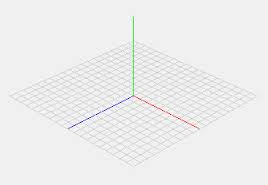
As for me, I placed a coordinate system upon life—
with God as the origin.
And suddenly, everything fell into place.
Clear. Neat. Satisfying.
Even now, I continue to favor this coordinate system, testing it again and again.
By God, I mean an intelligent First Cause.
Let us think, for a moment, about another elusive “space-time”: the universe itself.
Many scientists propose the Big Bang theory as the beginning of the universe.
It is currently the most widely accepted cosmological model.
According to it, the universe began with an explosion some ten to twenty billion years ago, and through its subsequent expansion came elementary particles, atoms, molecules, galaxies, stars, life, and human beings.
(A definition found online.)

At first, the idea that the universe had a beginning was difficult for scientists to accept.
Perhaps it felt uncomfortably close to God.
But because so much observable evidence was discovered, the theory is now widely accepted.
In other words, scientists placed an origin point—the Big Bang—
and tried to understand the space-time of the universe from there.
Once they did, many phenomena suddenly made sense.
Of course, one mystery remains:
“So what existed before the universe?”
That question is still unanswered.
According to Wikipedia,
in the early twentieth century most people—including astronomers—believed the universe was eternal and unchanging.
No astronomer openly claimed that the universe must have had a beginning.
Even Einstein, praised for his flexible thinking, regarded the idea of a beginning of the universe as utterly absurd.
An expanding universe was seen as religious rather than scientific.
In short, the idea of a beginning was resisted—
until scientists bowed before the evidence.
And once they accepted it and began to work with it, they found:
“This works.”
“It clears things up.”
That strikes me as a very scientific way of proceeding.
So—jumping rather suddenly to my conclusion—
I decided to set God, an intelligent (and loving) First Cause,
as the origin of life’s coordinate system.
And what a delight it was!
How refreshing!
So many mysteries began to make sense.
When I look at the world through the Bible, as if through a telescope or a microscope,
life becomes intelligible.
Meaning and purpose emerge.
That is why, in this thoroughly self-satisfied blog,
I keep talking about the sheer pleasure of having such a coordinate system for life.
…Hmm.
I seem to have grown rather fond of the phrase
“a coordinate system with God as the origin,”
and ended up writing this overly rational little essay on impulse.
Well—come to think of it,
aren’t they all like that?
m 豆 m